
Wi-Fi 7: What Cisco Pros Need to Know in 2025
Introduction
Wi-Fi technology is evolving at lightning speed. From Wi-Fi 5 to Wi-Fi 6 and 6E, each generation has brought faster speeds and more reliable connections. Now, in 2025, Wi-Fi 7 (IEEE 802.11be) is the next big leap. With ultra-high speeds, ultra-low latency, and advanced features, Wi-Fi 7 is set to transform networking. For Cisco professionals, understanding Wi-Fi 7 is not optional – it’s essential for future-ready networking.
What is Wi-Fi 7?
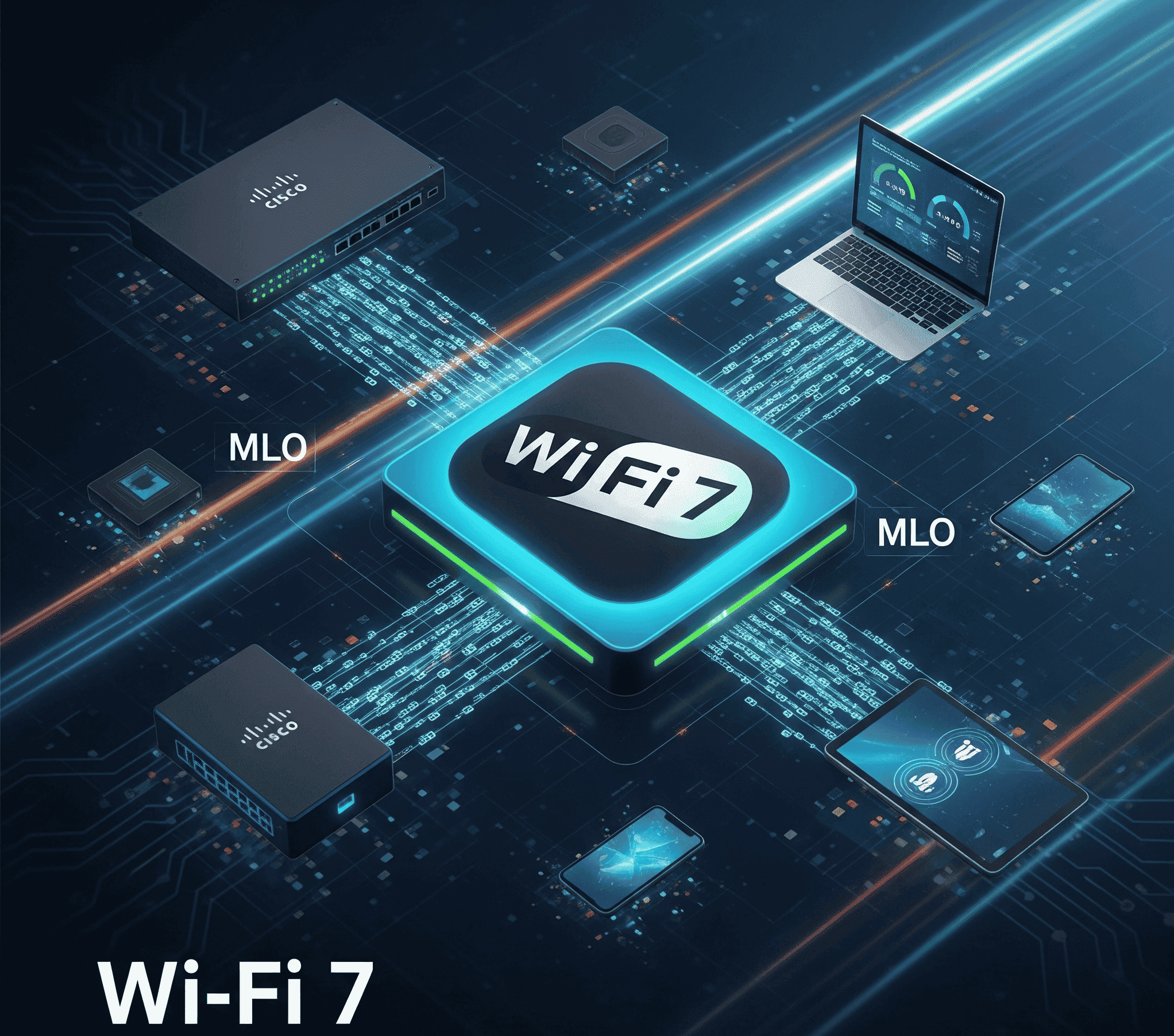
Wi-Fi 7 is the latest wireless standard designed to deliver speeds up to 46 Gbps. It introduces 320 MHz channels, 4K-QAM modulation, and Multi-Link Operation (MLO), making it the most powerful Wi-Fi generation yet.
Unlike Wi-Fi 6E, which extended support to the 6 GHz band, Wi-Fi 7 goes beyond bandwidth. It ensures stable, faster, and seamless connectivity for devices across multiple bands.
Why Wi-Fi 7 Matters in 2025
In 2025, the demand for high-performance networks is greater than ever. Applications like 4K/8K streaming, AR/VR, AI workloads, and IoT devices require networks with ultra-low latency.
Wi-Fi 7 enables:
-
Seamless AR/VR experiences
-
Lag-free cloud gaming
-
Smarter IoT ecosystems
-
Enterprise-grade performance for AI and big data
Simply put, Wi-Fi 7 is built for the future of digital transformation.
Cisco and Wi-Fi 7: Future-Ready Networking
Cisco has always been a leader in enterprise networking. With Wi-Fi 7, Cisco is preparing solutions that deliver:
-
Catalyst Access Points with support for Wi-Fi 7.
-
Meraki Cloud-Managed Wi-Fi for simple deployment and security.
-
AI-driven network automation for optimizing wireless performance.
-
Zero Trust Security embedded in wireless networks.
For businesses, this means smoother operations, better security, and scalable connectivity.
Benefits of Wi-Fi 7 for Businesses
Wi-Fi 7 is more than just speed. Its features bring:
-
⚡ Faster Speeds – Up to 4x faster than Wi-Fi 6.
-
⏱️ Ultra-Low Latency – Essential for real-time applications.
-
📡 Improved Spectrum Efficiency – Handles crowded environments better.
-
🔮 Future-Proofing – Ready for IoT, AI, and next-gen apps.
Wi-Fi 7 vs Wi-Fi 6E: Key Differences
| Feature | Wi-Fi 6E | Wi-Fi 7 |
|---|---|---|
| Spectrum | 2.4, 5, and 6 GHz | 2.4, 5, and 6 GHz (improved use) |
| Channel Width | Up to 160 MHz | Up to 320 MHz |
| Modulation | 1024-QAM | 4096-QAM |
| Latency | Low | Ultra-low (<2 ms) |
| Multi-Link Operation | No | Yes |
Should You Upgrade to Wi-Fi 7?
-
Enterprises: Yes, Wi-Fi 7 brings future-proof connectivity, essential for AI, IoT, and smart office solutions.
-
Home Users: If you use AR/VR, online gaming, or heavy streaming, Wi-Fi 7 is worth considering. Otherwise, waiting for device compatibility may be better.
Conclusion
Wi-Fi 7 is not just another upgrade – it is the biggest wireless transformation in years. For Cisco professionals, this is the perfect time to learn, prepare, and adopt Wi-Fi 7 technology. Businesses and IT teams that move early will enjoy faster, more secure, and more reliable networks.
The future of wireless networking is here – and it’s called Wi-Fi 7.